
Presentations
THEME 1: Jewish-Scandinavian WWII History

Dr. Miriam Klein Kassenoff, Director, Holocaust Institute, University of Miami, Education Specialist/Holocaust Education, Miami-Dade County Public Schools: "Dr. Cami Green Hofstadter, a presenter at the UM Teachers Institute (and other S. Florida venues such as synagogues, OLLI Lifelong Learning Institutes, JCCs, and Holocaust Education Centers), shows in an engaging way that what happened to the Scandinavian Jews isn’t just about the successful rescue of the Jews in Denmark but should always include Finland, Norway, and Sweden in the context of the Holocaust years. Our teacher educators were all intrigued, impressed and enlightened by this superb presentation."
In Cami Hofstadter’s words:
The fate of the war-time Jews in Scandinavia can be presented through many different narratives: country-by-country in five or six sessions or as a one-time lecture. When each country is presented individually (but not in total isolation from each other), the topic covers the four different Nordic countries (Denmark, Norway, Sweden, Finland), each with a different outcome for the Jewish population. I also include Greenland and Iceland, when appropriate.
Although fully research-based, the topic is presented in a conversational style, as opposed to an overwhelming “dry academic approach” while the humane side of the subject is often overlooked. Through relevant slides that depict well-documented stories, I make the subject come alive.
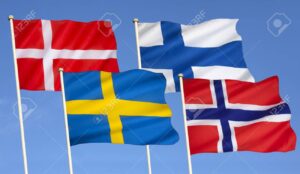
Flags of Scandinavia - Denmark, Finland, Sweden and Norway.
Sometimes I'm asked to address the “Finnish situation” separately, because of unique underlying facts, such as the Nazi Wehrmacht and SS troops fighting side-by-side with not only Finnish but Jewish-Finnish soldiers. As co-belligerents (not allies), Germany and Finland shared a common enemy in the Soviet Union.
At no time was Finland occupied by Hitler or Stalin. Among the more commonly known events are the roles of the Danish King saving the Jews of Denmark, and the Swedish hero Raoul Wallenberg. Both show audiences how history and culture continue to affect the way we still view human relations, specifically in the area of tolerance and the fight against antisemitism.
Presentation venues include OLLIs (Osher Lifelong Learning Institutes) at many universities around the country (Zoom platform) and in-person talks at S. Florida venues such as synagogues, OLLIs, JCCs, and Holocaust Education Centers. Florida International University, with its extensive Jewish Studies Program http://jewishstudies.fiu.edu/ and its Jewish Museum (S. Miami Beach). A post-talk FIU interview of me is available on p. 3 of https://miamieuc.fiu.edu/newsletter/2015/january-february-2015/janfeb2015-updated.pdf
THEME 2: Demystifying the Foreign Consuls in |your state|.
With a number of foreign connsulates in (your area) and their reach from out-of-state locations there’s a definite consular presence throughout all fifty states. But why are these foreign officials in our communities? Once the syntactical problem is overcome (actually, an interesting matter in itself), I adjust my presentation to individual audiences. If listeners think the matter of a legitimate consular function alone is easy to define, they're in for a surprise!
What do these consuls do? Who are they: foreigners or citizens? Diplomats? Ambassadors? Consulates or consuls?
Although the international treaty provisions (in the Vienna Convention on Consular Relations, and many bilateral agreements) give us broad guidance on activities in the commercial, economic, cultural, scientific, and educational areas, one intriguing example is the case of “Hitler’s Hollywood consul” that leaves us wondering about legitimate consular functions (spying? criticizing the arts in the hosting territory?). After all, this official was properly approved by the U.S. Government to function as a foreign consul in a designated geographic area so the legitimacy of his work couldn't just be an isolated peculiarity defined by politicians.
Variations of the overall topic:
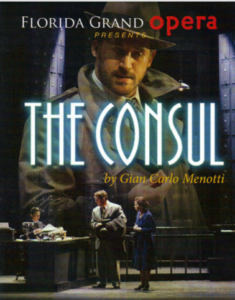
My subject also includes the fun side of the prestige inherent in "consul." Some marketing gurus have even appropriated the title as a label for products that have nothing whatsoever to do with the nature of these foreign officials. For instance, there are Consul-brandings of household items, shoes, and much more, which - along with Consul-themed books, plays, operas - make for fascinating tidbits in my talks.
To request a presentation, please email me at [email protected]