
What’s a Consular Corps?
The short answer is that it refers to a group of consuls, a term to describe a collective of consular officials in a particular geographic area as opposed to one single individual. As outlined in my book The Foreign Consuls Among Us: Local Bridges to Globalism, a consular corps is a body in and of itself, sui generis. Or, in the diplomatic language of French: it is a Corpse Consulaire (abbreviated CC).
Above all, a consular corps is not a “corpse” (as in a "dead body" enunciated with a hard p-s). Regardless of how many times the term is mispronounced and misspelled, an incorrect pronunciation reflects a flaw in global sophistication by the speaker. Sadly, even top government officials perpetuate this ear-scorching mistake when referring to such entities as the Army Corps of Engineers, and more.
Further confusion may arise in a U.S. community where a group of consuls has formalized itself under state requirements for associations or corporations, probably because membership in such a "consular corps" is extended to individuals without any consular status. A group of consuls strictly consisting of persons with legitimate accreditation by the U.S. Department of State does not require a separate action (like a "membership" vote or some sort of formal recognition by a local government); it just is a consular corps. Remember, sui generis.
Interestingly, when delegates from ninety-five nations met in Vienna in 1963 to adopt an international treaty on consular relations, they did indeed debate the use of the term “consular corps” but – just as the diplomatic convention (Vienna, 1961) had rejected references to a diplomatic corps – “consular corps” doesn’t appear anywhere in the formally adopted document. This has led to much confusion and misunderstanding in communities around the U.S., let alone in the naming of these groups.
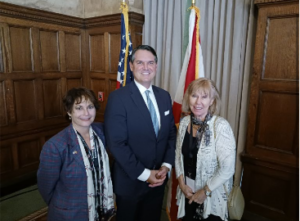
In 2022, Florida hosted a "Consular Corps Summit" in Coral Gables with the theme Connected in Business, United in Culture. Clearly, this was a way to forge a connection with all foreign consuls with jurisdiction in the state. The picture features Florida Secretary of State Cord Byrd between the Consul of N. Macedonia and myself.
Miami and Beyond
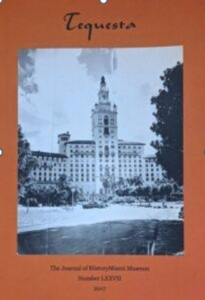
After my appointment (and requisite U.S. State Dept approval) I became curious about when the consular corps had “arrived” in Miami. Mostly, the 1950s was mentioned but nobody was quite certain. Being a researcher at heart, I began my investigation but immediately faced the challenges of repeatedly incorrect terminology in the printed material. Nevertheless, my hard work resulted in a piece, A Corps of Foreign Consuls: Looking at its Miami Roots. Tequesta (Nr. LXXVII, Dec. 2017), Museum of Miami Digital Archives
Even though the focus is mainly on Miami, the story shows how history plays its own tricks on all of us – regardless of what consular corps is of interest to you – if we don’t understand the meaning of the term “consular corps” and therefore use only flimsy definitions that have little or no meaning.
A Flashback to Old Times at the Consular Corps of Miami

Norwegian Consul with wife and a female Lt. Cmdr of the U.S. Navy
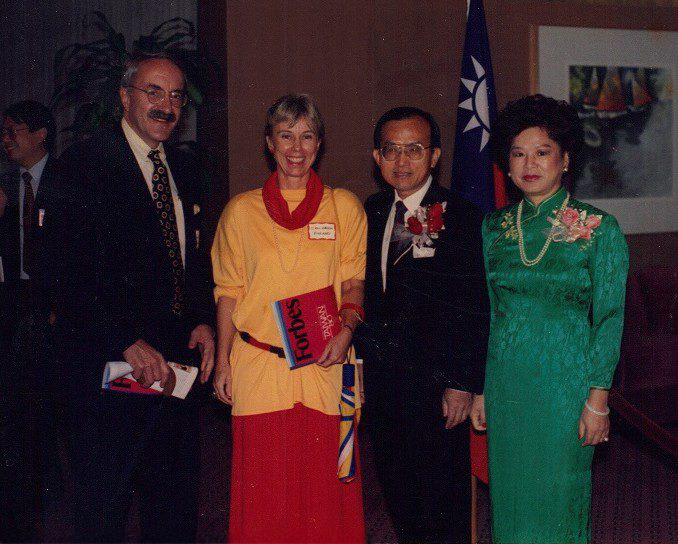
Celebrating Taiwan’s national holiday with the Director General and his wife
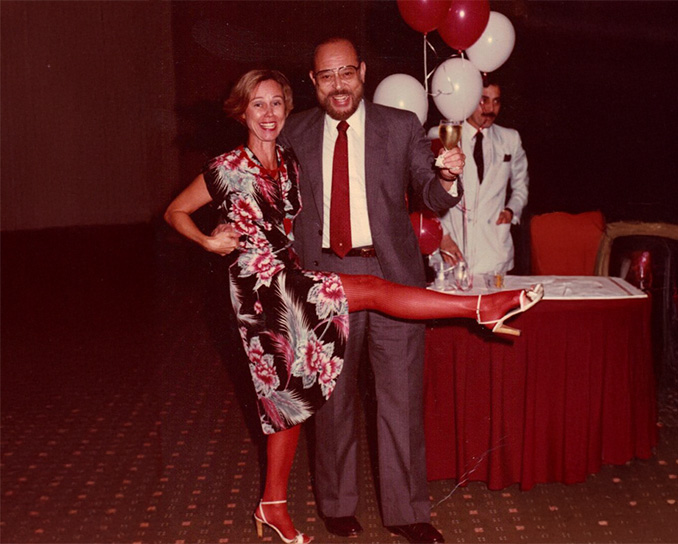
Dean Roberto Garcia Pena (Colombia) giving a Valentine’s lift to the Secy. of the Corps.
Throughout the 1980s, the Consular Corps of Miami developed a notable presence in its host-city through such events as special programs on individual countries. The annual consular ball and Valentine’s party became quite sought-after affairs due to an evolving image of prestige, but also for the camaraderie that brought community leaders together with the foreign consuls in their midst.